Range of Motion (ROM) Stretch Therapy
Location: Albany, New York
Instructor: Dawn Dotson
Date: 02/20/2026 - 02/21/2026
Time: 9:00 am - 6:00 pm - both days
Continuing Education Credits: 16 CE's
Stretch Therapy training: Enhancing performance through mobility
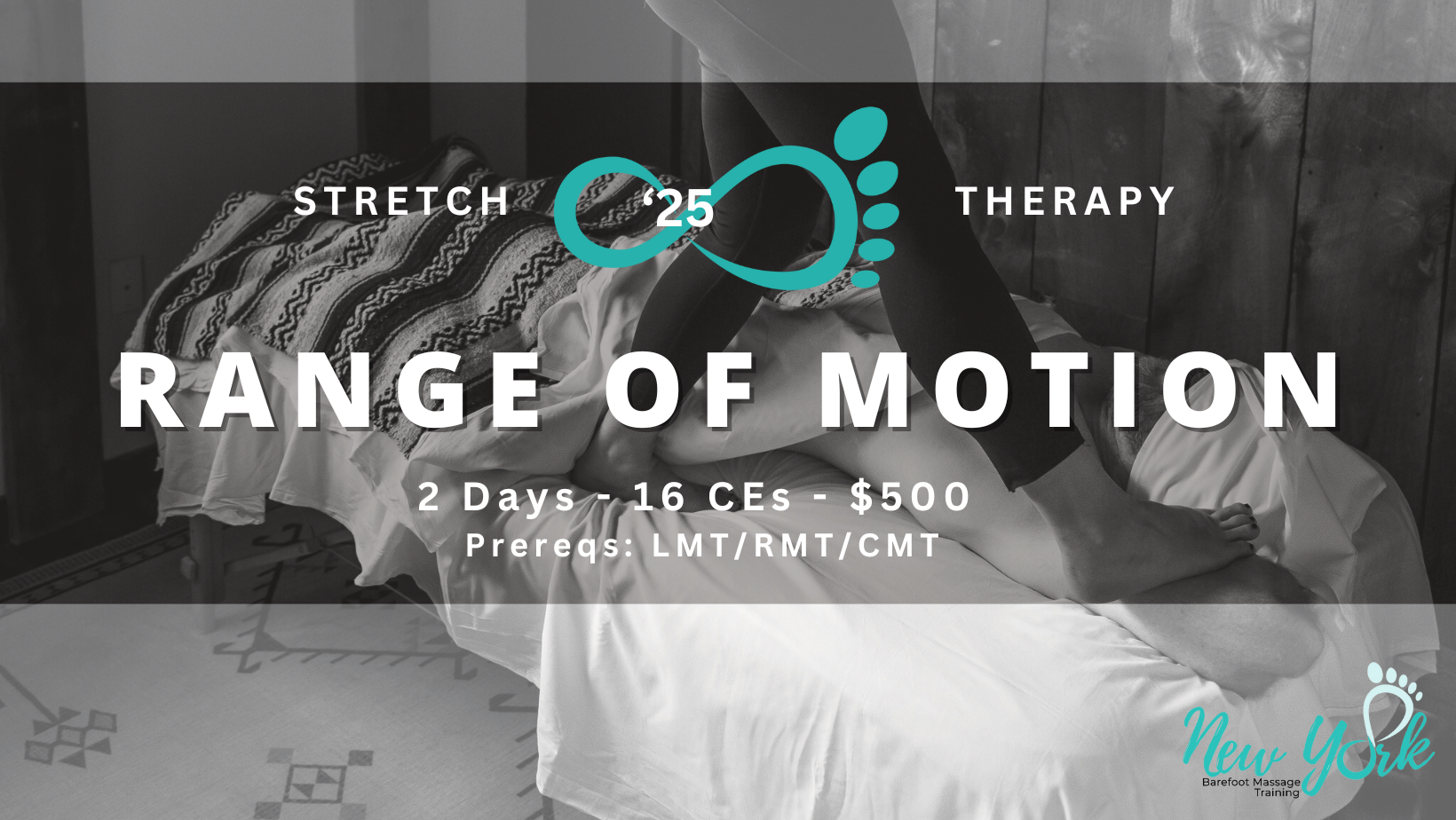
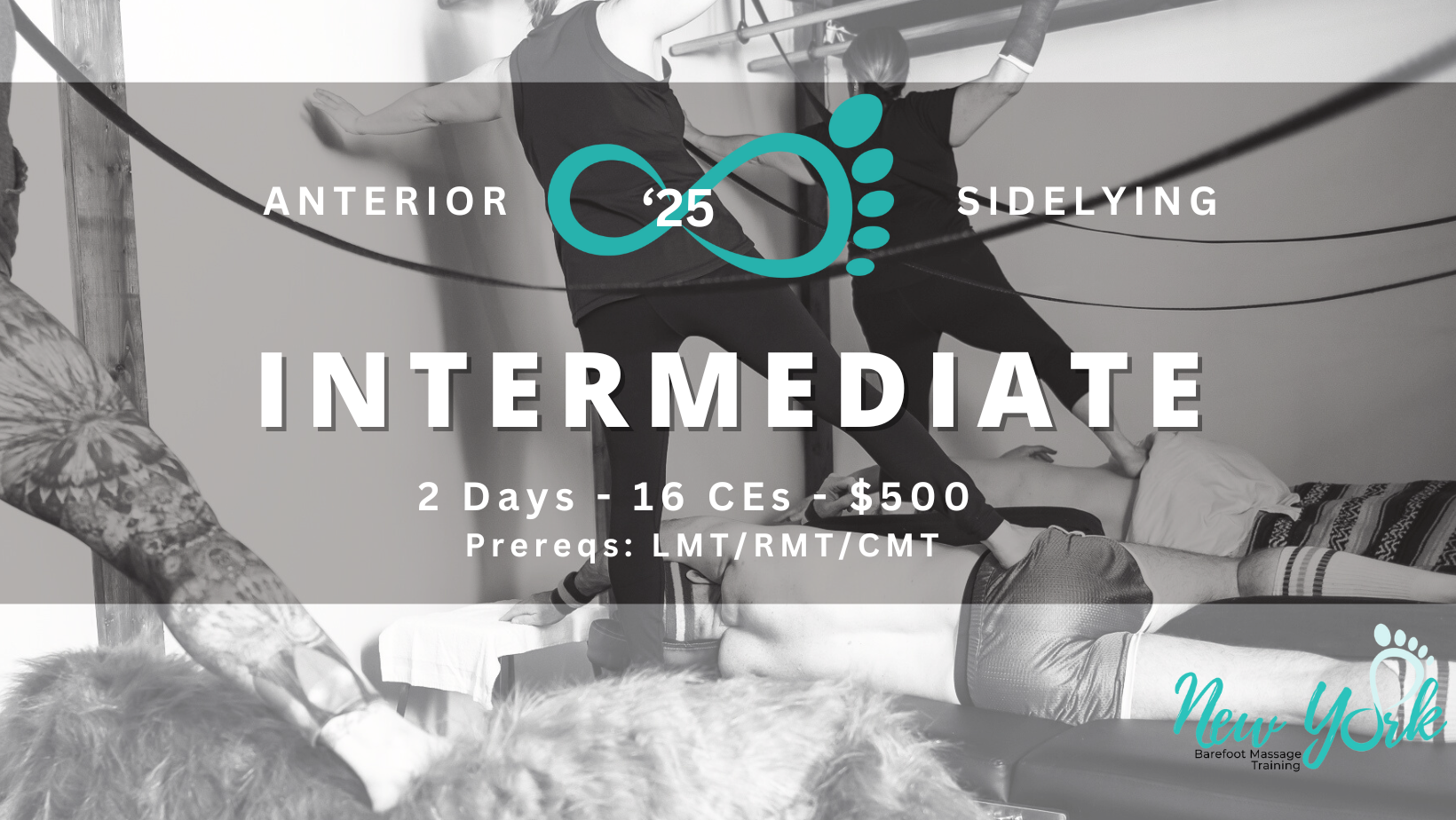
With a focus on Active and Resisted Range of Motion techniques, this Stretch Therapy barefoot massage technique allows the Massage Therapist to stand on a massage table and maneuver clients’ limbs using the strong muscles of their legs and hips to steer and control client positioning and motion. We hold onto overhead bars and lean into our suspended support straps for balance and leverage as we lift, bend, and twist clients into assisted stretches while they activate their muscles as cued by the practitioner, adding resistance and dynamic stretch theory into the mix. Our approach to assisted stretching helps a practitioner effortlessly maintain consistent pressure and counterbalance while providing deep point holds, or long fascial stretches.
We also compress or restrict clients compensating body parts down into a neutral alignment while creating various ranges of motion throughout all major joints in the body. The Barefoot Massage Therapist can observe movement patterns and queue the client into resisted actions to help build joint stability, and encourage their interoceptive awareness during passive fascial stretching and proprioceptive neuromuscular facilitation.
We’ll be reviewing secure draping options while blending ROM into slow gliding, non-lubricated movements along the client’s skin. Can be adapted for more use of creme or provided with the client clothed. A full-body, (supine, side-lying and prone) 3-dimensional stretch sequence is taught.
Resisted Movement is Medicine
This class blends dynamic and resistance stretching with barefoot massage techniques to enhance mobility, reduce protective tension, and support tissue adaptability. You’ll use your feet to guide clients through multidirectional movement, traction, and elongation—while applying deep, consistent pressure. The result? A session that feels like mobility and massage had a baby.
Grounded in current research on neurodynamics, fascia, and stretch tolerance, this approach helps clients build trust in their own movement and gives therapists an effective, body-saving way to improve joint function and reduce sensations of stiffness.
ROM work helps clients who feel “stuck” in their bodies—physically and mentally. By actively engaging tissue and encouraging safe movement at end ranges, this method can reduce movement fear, improve proprioception, plus restore natural fascial and joint glide.
Research & Science Resources
1. Pain Science Education:
Movement is one of the best ways to reduce pain. ROM sessions use pressure and motion to reassure the nervous system and improve tolerance to stretch.
🔗 Pain Revolution – Pain Facts
2. Stretching and Nervous System Response:
This article explores how stretching doesn’t “lengthen” muscle in the way we used to think—it changes the nervous system’s sensitivity. A must-read to understand why ROM sessions feel so transformative.
🔗 PainScience – Neurodynamic Stretching Article
3. Effects of Massage on Range of Motion:
This clinical review supports how massage and stretching combined can improve joint range—especially with repeated treatments over time.
🔗 PMC – Massage Therapy and ROM Study
Make your clients work for their session: resistance is the future!
Prerequisites: FasciAshi Fundamentals.